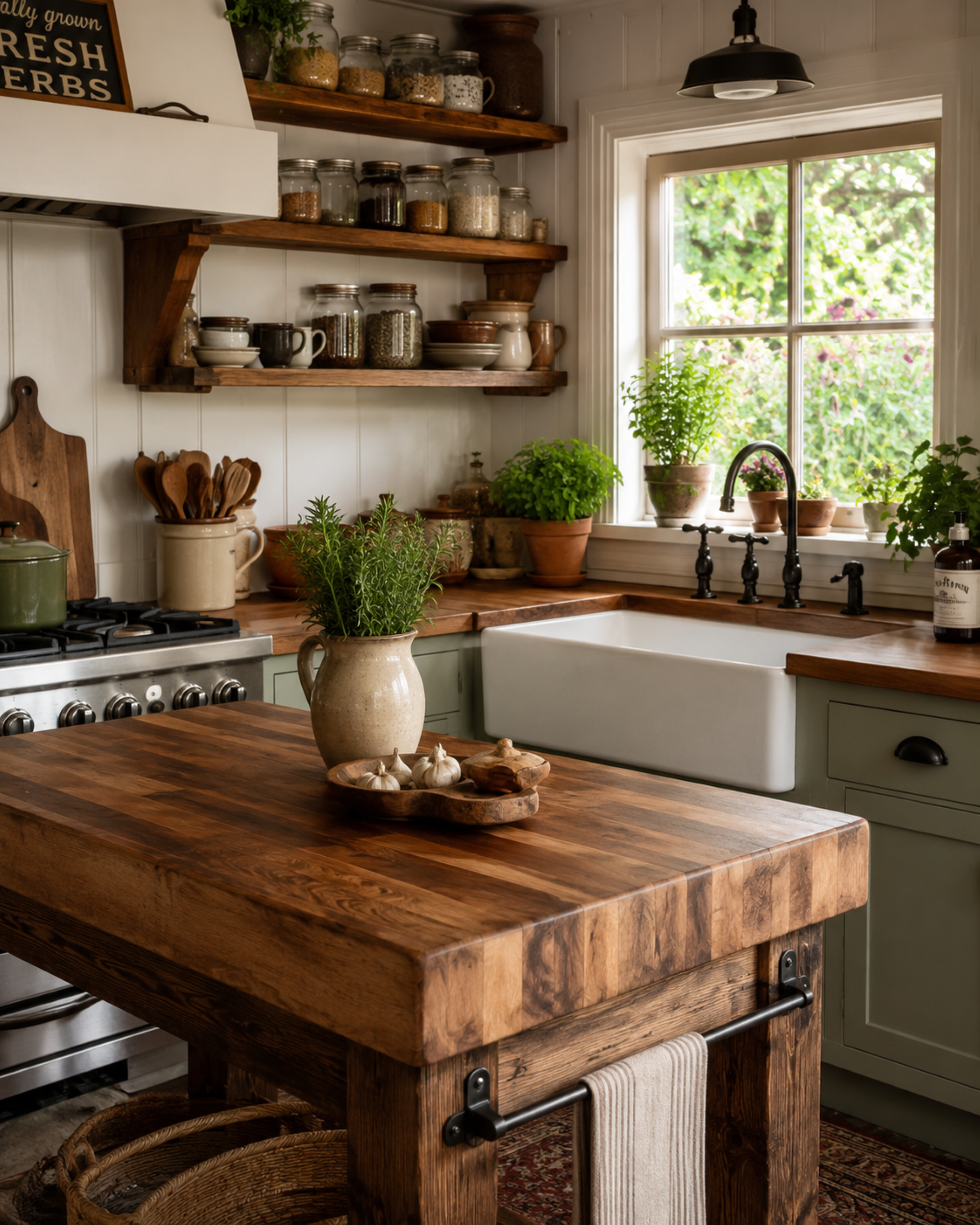
When I first moved into my 600-square-foot apartment with a kitchen barely large enough to turn around in, I was determined to create a space that felt warm, functional, and uniquely mine—without draining my savings account. After months of research, countless trips to the lumber yard, and a few trial-and-error projects, I discovered that butcher block countertops are one of the most transformative yet budget-friendly upgrades you can make to a small kitchen.
As someone who has personally built, installed, and maintained butcher block surfaces in three different homes over the past five years, I can confidently say that this material offers an unbeatable combination of affordability, durability, and timeless aesthetic appeal. Whether you’re a seasoned DIY enthusiast or a first-time homeowner with a modest toolkit, this guide will walk you through four distinct design styles—each tailored to a specific aesthetic—so you can find the perfect butcher block countertop idea for your small kitchen.
Why Choose Butcher Block Countertops for Small Kitchens?
Before diving into the design ideas, let’s address the elephant in the room: Why butcher block?
Butcher block countertops are constructed from straight pieces of hardwood—typically maple, oak, walnut, or alder—that are glued together to create a sturdy, visually striking surface. Unlike granite or quartz, which can cost $50–$150 per square foot installed, butcher block ranges from $30–$70 per square foot, making it significantly more accessible for budget-conscious renovators.
What truly sets butcher block apart, however, is its warmth and character. In a small kitchen, where every design choice is amplified, the natural grain patterns and rich tones of wood can make the space feel inviting rather than cramped. Additionally, wood is naturally antibacterial and self-healing—minor scratches can be sanded out, and the surface develops a beautiful patina over time.
From an installation perspective, butcher block is far more forgiving than stone. It can be cut with standard woodworking tools, doesn’t require specialized machinery for edge profiling, and can be finished in a weekend with the right preparation. For small kitchens, where countertop runs are typically shorter, this translates to lower material costs and lower labor costs—whether you’re DIYing or hiring a professional.
Essential DIY Tips Before You Begin
Regardless of which style you choose, there are universal best practices for working with butcher block countertops that I’ve learned through hands-on experience:
1. Choose the Right Wood Species
- Maple: The gold standard—hard, durable, and resistant to wear. Ideal for high-traffic kitchens.
- Oak: Affordable and widely available, with prominent grain patterns that hide scratches well.
- Walnut: Premium look with rich, dark tones. Softer than maple but stunning in appearance.
- Alder/Birch: Budget-friendly alternatives that still deliver excellent results. Alder, in particular, can cost about half the price of maple while maintaining a beautiful aesthetic.
2. Allow for Proper Acclimation
Wood is hygroscopic—it absorbs and releases moisture based on environmental conditions. Before installation, let your butcher block acclimate in the room where it will be installed for at least 48–72 hours. This prevents warping and cracking after installation.
3. Seal and Maintain Religiously
The longevity of your butcher block countertops depends entirely on maintenance. Apply food-grade mineral oil or a butcher block conditioner monthly (more frequently in dry winter months). Wipe up spills immediately, use cutting boards for heavy chopping, and never place hot pots directly on the surface.
4. Plan for Expansion and Contraction
Wood expands in humid summer months and contracts in dry winter air. When attaching your countertop to the base cabinets, use screws with washers and leave a small gap (about 1/16 inch) between the countertop and any solid backing to allow for airflow and movement.
Design Idea #1: The Classic Farmhouse
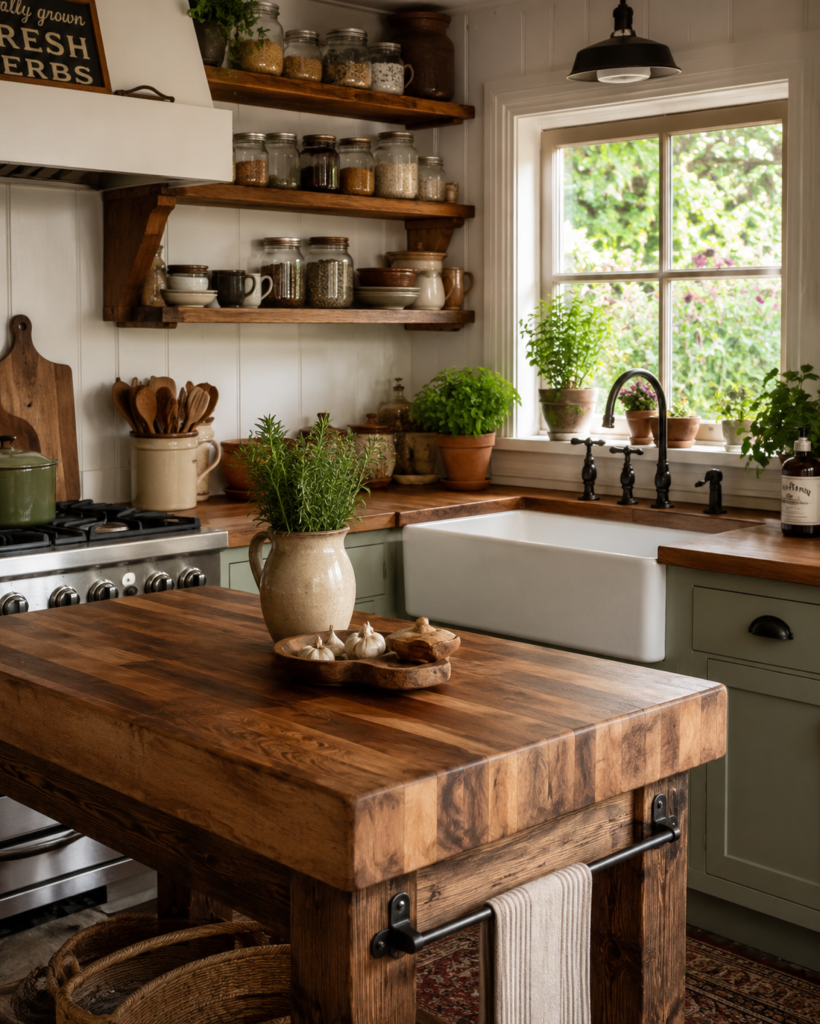
The Aesthetic
The Classic Farmhouse style is all about warmth, nostalgia, and functionality. It draws inspiration from traditional American farm kitchens—spaces where cooking was a labor of love, and every element served a purpose. This style is perfect for small kitchens because it embraces a “collected over time” look, which means you don’t need everything to be brand new or perfectly matched.
Key Design Elements
- Thick butcher block countertops (2–3 inches) with visible end-grain or edge-grain construction
- Farmhouse sink (apron-front) paired with oil-rubbed bronze or matte black fixtures
- Open shelving made from reclaimed wood to display ceramic crocks, mason jars, and vintage kitchenware
- Sage green, cream, or soft white cabinetry with simple hardware
- Natural textures: Woven baskets, linen towels, and terracotta pots with fresh herbs
DIY Implementation
For this style, I recommend using oak or maple butcher block with a natural oil finish rather than a heavy stain. The goal is to let the wood’s natural beauty shine. If you’re building the countertop yourself, rip your boards into 1.5-inch strips and alternate the grain direction for visual interest.
Budget Tip: Instead of buying pre-made butcher block, purchase hardwood boards from a local lumber yard and have them planed and ripped to size. This can cut your material costs by 40–50%. If you have access to reclaimed barn wood, even better—the imperfections add authentic farmhouse character.
Why It Works in Small Kitchens
The light, natural tones of the wood reflect light rather than absorb it, making the space feel larger. Open shelving eliminates the visual weight of upper cabinets, and the thick butcher block island becomes a functional focal point that doubles as a prep station and casual dining area.
Design Idea #2: Modern Minimalist
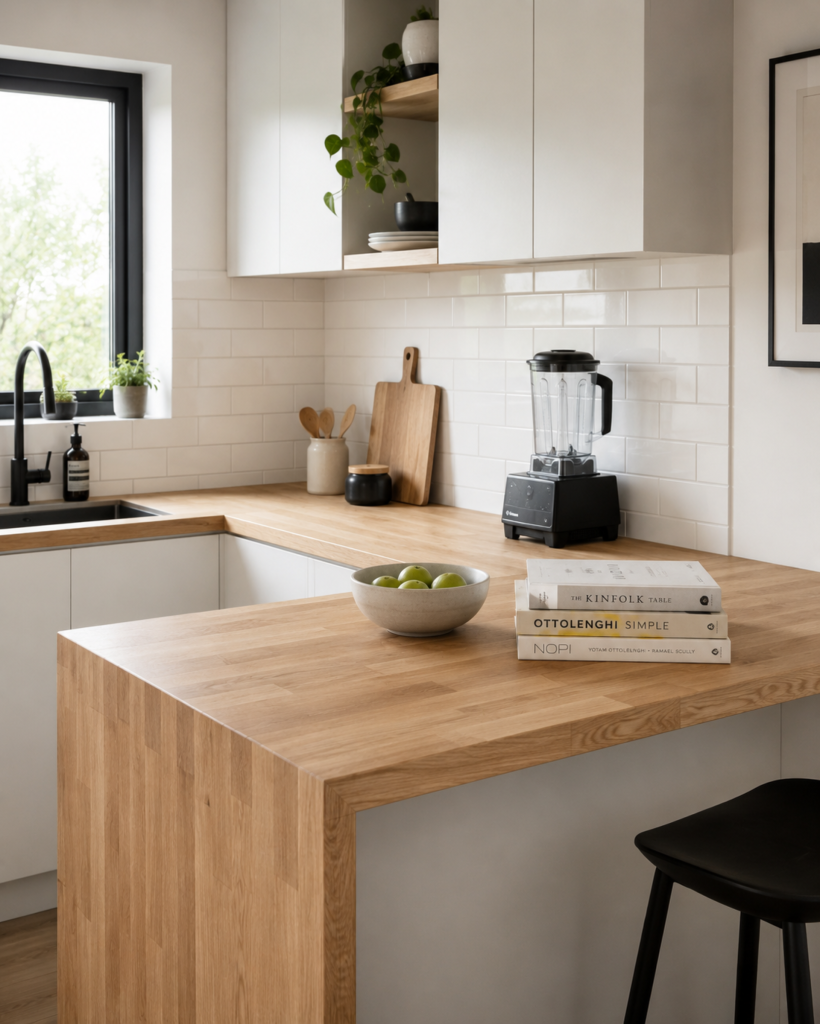
The Aesthetic
Modern Minimalist kitchens are defined by clean lines, uncluttered surfaces, and a neutral color palette. The philosophy is simple: every element should be functional, beautiful, or both. In this style, butcher block countertops serve as the primary source of warmth and texture, preventing the space from feeling sterile.
Key Design Elements
- Light-colored butcher block (ash, maple, or birch) with a smooth, matte finish
- Flat-panel or handle-less cabinets in white, soft gray, or pale wood tones
- White subway tile backsplash with minimal grout lines
- Black or brushed nickel fixtures for subtle contrast
- Sparse, intentional decor: A single cutting board, a bowl of green apples, or a stack of neutral cookbooks
DIY Implementation
For a Modern Minimalist look, precision is key. Your butcher block countertop needs to have perfectly square edges and a flawlessly smooth surface. Sand progressively from 120 grit to 220 grit, and finish with a hardwax oil like Saicos Premium Hardwax Oil for a matte, food-safe surface that doesn’t look overly glossy.
Budget Tip: Choose a thinner butcher block (1–1.25 inches) and build up the edge with a mitered strip to create the illusion of thickness without the cost. This technique, known as “edge banding,” is a favorite among professional installers for achieving a high-end look on a budget.
Why It Works in Small Kitchens
Minimalism is inherently space-enhancing. By limiting visual clutter and using a cohesive color palette, the eye travels smoothly across the room, making it feel larger than it is. The light wood tones of the butcher block countertops bounce natural light around the space, while the clean lines prevent the kitchen from feeling busy or cramped.
Design Idea #3: Industrial Chic
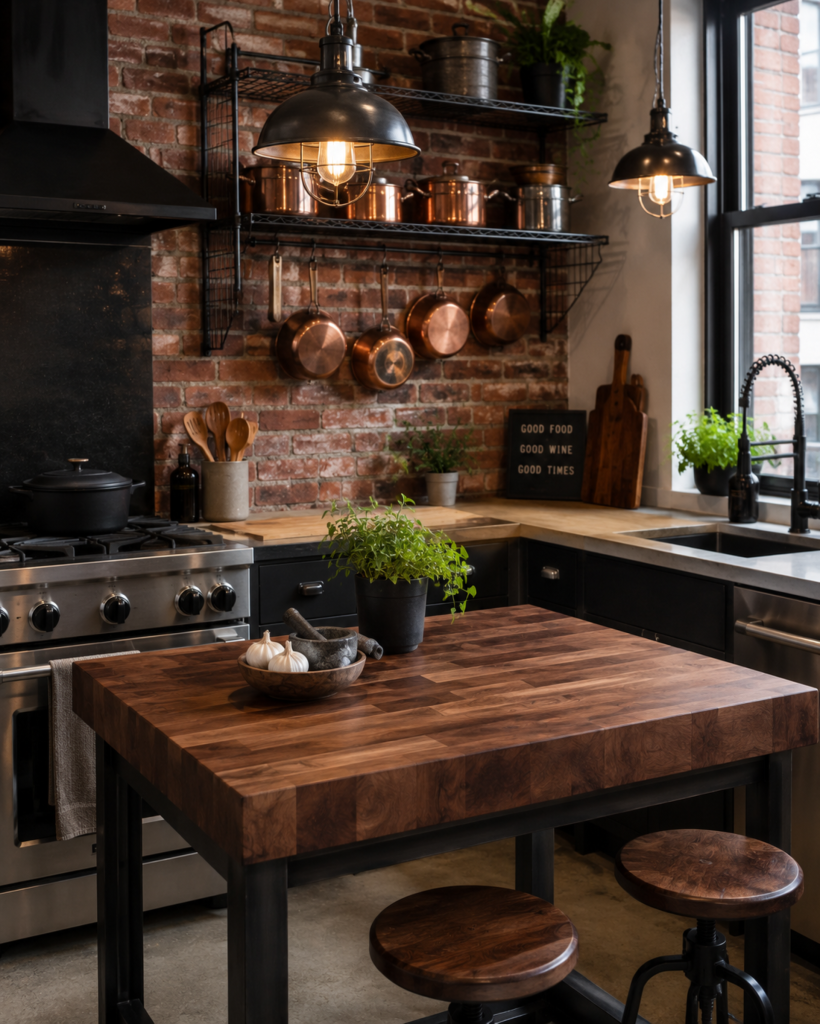
The Aesthetic
Industrial Chic marries raw, utilitarian elements with refined design touches. Think converted loft apartments in Brooklyn or repurposed warehouse spaces—exposed brick, metal accents, and warm wood tones that soften the overall look. This style is surprisingly adaptable to small kitchens because it celebrates functionality and doesn’t shy away from bold contrasts.
Key Design Elements
- Dark walnut or stained oak butcher block with a rich, dramatic finish
- Exposed brick or concrete walls (or faux brick wallpaper for renters)
- Black metal shelving with wire baskets and hanging copper cookware
- Stainless steel appliances with professional-style ranges
- Edison bulb pendant lights or cage-style fixtures in black or brushed metal
DIY Implementation
For an authentic industrial look, consider staining your butcher block countertops rather than leaving them natural. A dark walnut gel stain paired with a satin polyurethane top coat creates a sophisticated, almost leather-like finish. Be aware that maple can be blotchy when stained, so use a pre-stain conditioner and opt for a gel stain formula for more even coverage.
Budget Tip: Source your metal shelving from industrial supply stores rather than home decor retailers—they often sell the same materials at a fraction of the cost. For the butcher block, consider using poplar wood as a budget alternative; while softer than traditional hardwoods, it accepts stain beautifully and costs significantly less.
Why It Works in Small Kitchens
The dark tones of the butcher block and metal accents create a cozy, cocoon-like atmosphere that makes small spaces feel intimate rather than confining. The vertical storage (hanging pots, wall-mounted shelves) maximizes every inch of wall space, while the substantial thickness of the butcher block island grounds the room and provides a generous work surface.
Design Idea #4: Cozy Boho
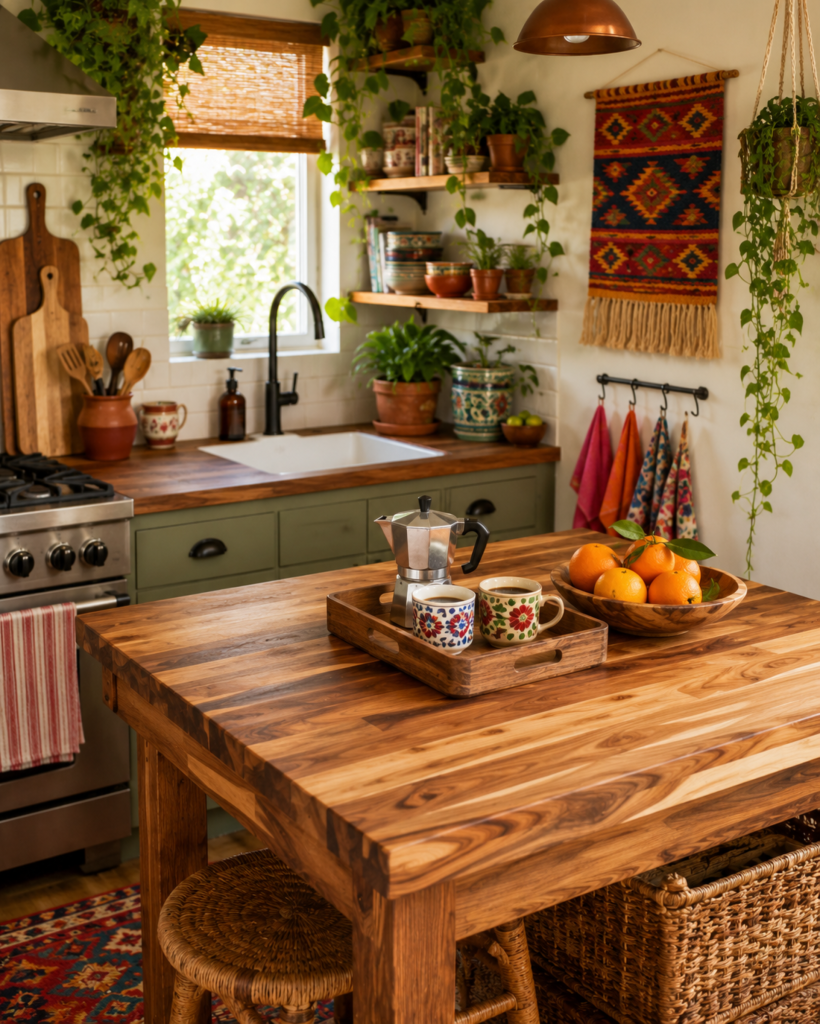
The Aesthetic
Cozy Boho is the antithesis of rigid design rules. It’s eclectic, layered, and deeply personal—a style that invites you to mix patterns, textures, and cultural influences. In a small kitchen, this approach can feel overwhelming if not executed thoughtfully, which is why butcher block countertops serve as the perfect neutral anchor.
Key Design Elements
- Warm-toned butcher block (acacia, teak, or richly grained oak) with a natural oil finish
- Sage green, terracotta, or mustard yellow cabinetry with vintage-style hardware
- Hanging plants and trailing vines on open shelves and windowsills
- Textiles: Woven rugs, macramé wall hangings, and colorful dish towels
- Eclectic pottery and ceramics: Hand-painted mugs, terracotta bowls, and vintage canisters
DIY Implementation
For the Cozy Boho style, embrace the imperfections in your butcher block. Slightly uneven edges, visible wood grain, and a hand-rubbed oil finish all contribute to the organic, lived-in feel. I recommend using a butcher block conditioner that contains beeswax and mineral oil—it enhances the wood’s natural warmth and creates a subtle sheen that catches the light beautifully.
Budget Tip: Thrift stores, flea markets, and estate sales are goldmines for boho kitchen decor. A $5 vintage ceramic pitcher or a handwoven basket can add more character than a $50 mass-produced item. For the butcher block itself, look for “character grade” wood, which includes knots and color variations at a lower price point than “select grade.”
Why It Works in Small Kitchens
Boho design thrives on vertical interest—hanging plants, wall-mounted textiles, and open shelving draw the eye upward, creating the illusion of height. The warm wood tones of the butcher block countertops ground the space and prevent the eclectic mix of colors and patterns from feeling chaotic. Plus, the style’s emphasis on handmade and vintage pieces means you can curate your kitchen gradually, spreading costs over time.
Maintenance Schedule: Keeping Your Butcher Block Countertops Beautiful
Regardless of which style you choose, consistent maintenance is non-negotiable. Here’s the schedule I follow in my own kitchen:
| Frequency | Task |
|---|---|
| Daily | Wipe with damp cloth; clean spills immediately |
| Weekly | Scrape surface with a dough scraper; sanitize with diluted white vinegar |
| Monthly | Apply food-grade mineral oil or butcher block conditioner |
| Quarterly | Deep clean with mild soap; inspect for stains or damage |
| Annually | Light sanding (220 grit) and re-oiling if needed; assess for refinishing |
If you notice deep stains, don’t panic. Sand the affected area with 180-grit sandpaper, progressing to 220-grit, then re-oil. The sanded area will initially appear lighter, but it will blend in after a few oiling cycles.
Final Thoughts: Your Small Kitchen, Your Style
After years of working with butcher block countertops in various settings—from a cramped city apartment to a cozy suburban cottage—I’ve learned that the best kitchen is one that reflects your personality and meets your daily needs. The four styles presented here—Classic Farmhouse, Modern Minimalist, Industrial Chic, and Cozy Boho—are starting points, not prescriptions. Mix elements from each, adapt them to your space, and don’t be afraid to experiment.
The beauty of DIY butcher block countertops lies not just in the cost savings, but in the satisfaction of creating something with your own hands. Every scratch, every oiling session, every patina mark tells a story. And in a small kitchen, where you’re intimately connected to every surface, that story becomes part of your daily life.
So grab your sandpaper, pick your wood, and get started. Your dream kitchen is closer—and more affordable—than you think.
Frequently Asked Questions
Q: How much can I save by building my own butcher block countertop?
A: Building your own butcher block countertop can save you 40–60% compared to purchasing pre-made slabs. A DIY project using knotty alder or poplar can cost as little as $100–$200 for a small kitchen island.
Q: Can I install butcher block countertops around an undermount sink?
A: Yes, but it requires careful sealing. Use a waterproof, food-safe sealer around the sink cutout and reseal annually to prevent water damage.
Q: What’s the best finish for butcher block countertops?
A: For a natural look, use food-grade mineral oil or butcher block conditioner. For a more durable, water-resistant surface, consider a hardwax oil like Saicos Premium Hardwax Oil. Avoid pure oil-only finishes around sinks, as they don’t provide permanent sealing.
Q: How thick should a butcher block countertop be?
A: For countertops, 1.5–2 inches is standard. For kitchen islands that double as dining surfaces, 2–3 inches creates a more substantial, furniture-like appearance.


Leave a Reply