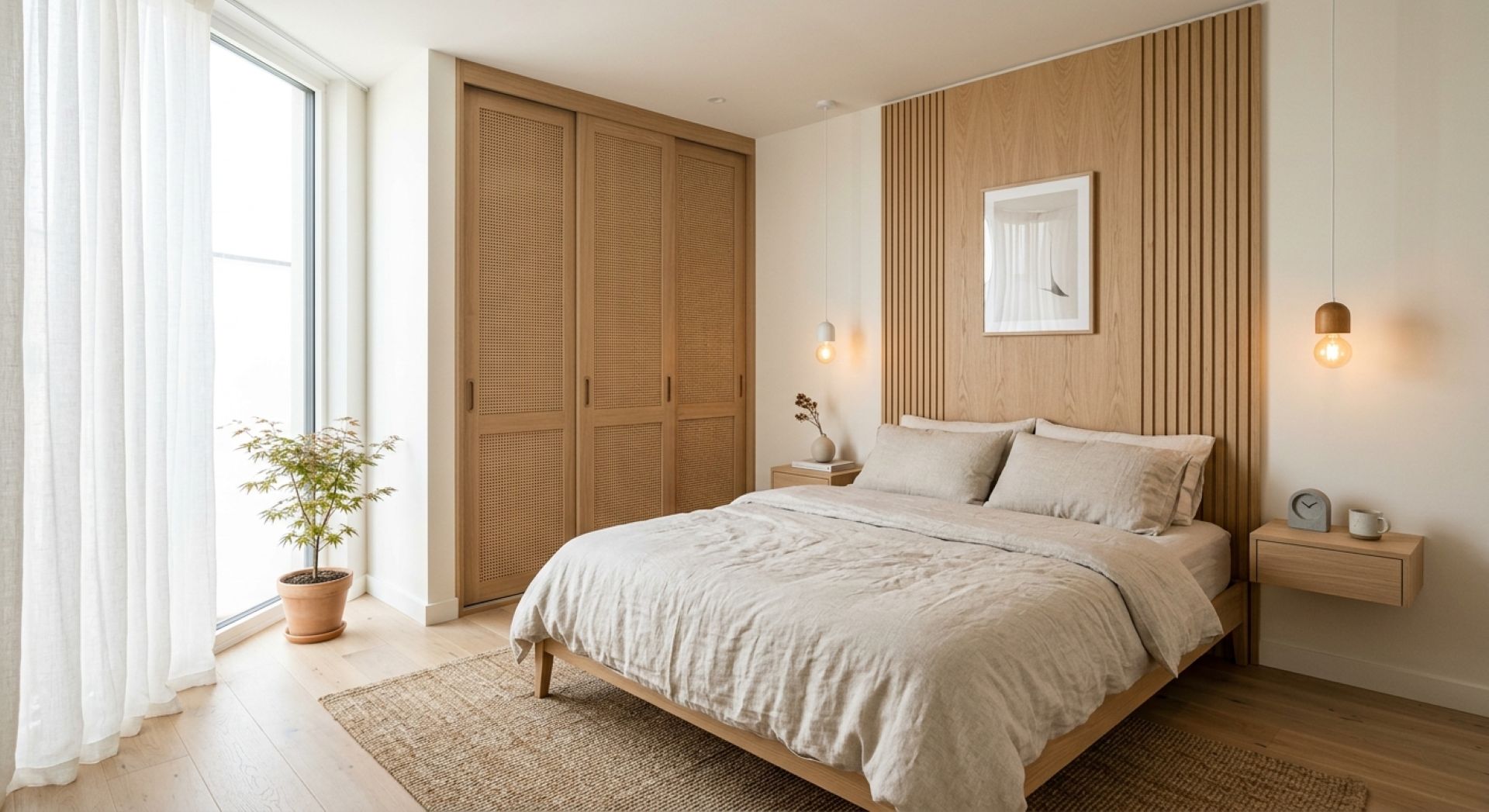
When I started helping friends redesign their apartment bedrooms, the question I heard most often was some version of: “How do I make my tiny master bedroom feel like a real retreat without knocking down a wall?” After styling and photographing dozens of small bedrooms over the years — measuring tape in one hand, mood board in the other — I’ve learned that square footage is rarely the real problem. Layout, color, and restraint are.
This guide pulls together five master bedroom decor ideas I’ve tested, refined, and photographed in real apartments: Japandi, cozy modern industrial, earthy boho, elegant transitional, and bright Scandinavian. Each one solves the small-bedroom puzzle differently, so whether you’re working with 90 square feet or a slightly more generous 130, you’ll find a layout and palette that fits your space and your taste.
If you’re searching for practical, tested master bedroom decor ideas rather than just pretty inspiration photos, you’re in the right place.
Why Small Master Bedrooms Are Harder to Design Than They Look
A small master bedroom has to do more with less. It’s usually the one room in the apartment that needs to hold a bed, storage for two people’s clothes, a nightstand or two, and somewhere to actually walk. Add a window, a closet door, and maybe a radiator, and the “flexible” floor space shrinks fast.
The five layouts below all follow a few shared principles that make small rooms feel larger and more intentional:
- Float furniture off the floor where possible (wall-mounted nightstands, elevated storage beds) to keep sightlines open.
- Use a tight, cohesive color palette — three to four tones, max — so the eye isn’t working overtime.
- Let the bed anchor the room and build everything else around it, rather than scattering furniture along every wall.
- Add layered lighting (overhead, bedside, and ambient) instead of relying on one central fixture.
- Choose multi-purpose pieces, like a bench that doubles as storage or a nightstand that floats to free up floor space.
With that framework in mind, here are five distinct ways to bring it to life.
1. Japandi Small Master Bedroom Layout
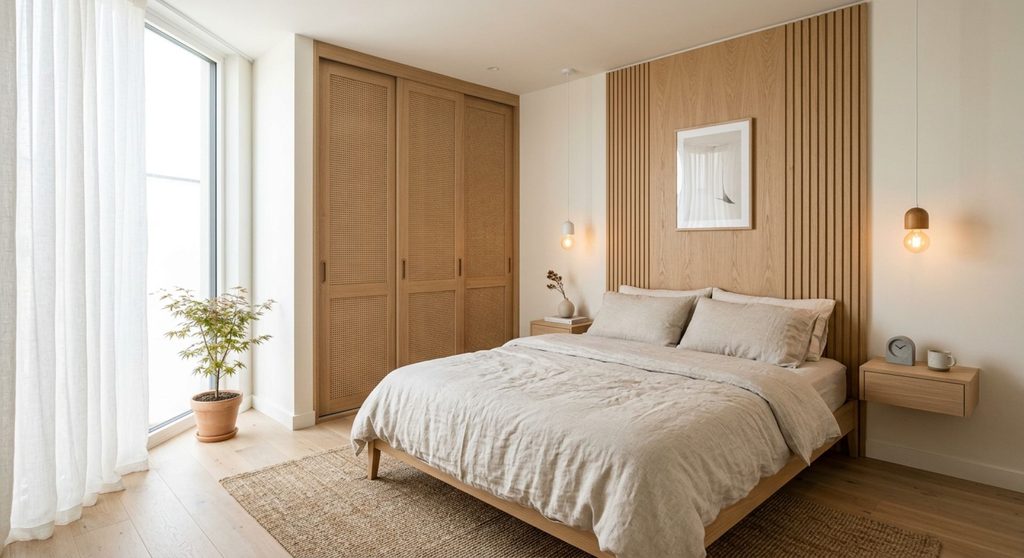
Japandi — the marriage of Japanese minimalism and Scandinavian warmth — is one of the most forgiving styles for a small master bedroom, because its entire philosophy is built around calm, uncluttered space. In the layout above, a slatted wood accent wall runs behind the headboard, adding texture and visual interest without taking up a single inch of floor space.
What makes this layout work:
- Low-profile platform bed. A bed frame with a low, simple silhouette keeps the ceiling feeling higher and the room feeling more open — essential in a small master bedroom.
- Floating nightstands. Wall-mounted nightstands on either side of the bed free up visual space beneath them, making the floor plan read as larger than it is.
- Warm wood tones against soft neutrals. Pairing natural oak or ash with beige, cream, and off-white keeps the palette cohesive and soothing rather than sterile.
- Pendant lighting instead of table lamps. Hanging pendant lights beside the bed eliminate the need for lamp bases entirely, which matters when nightstand surface area is limited.
- Negative space is the decor. In Japandi design, empty wall space and a single piece of framed art are intentional design choices, not gaps to be filled.
Best for: Renters and homeowners who want a serene, gender-neutral bedroom that photographs beautifully and never feels visually busy.
2. Cozy Modern Industrial Small Master Bedroom
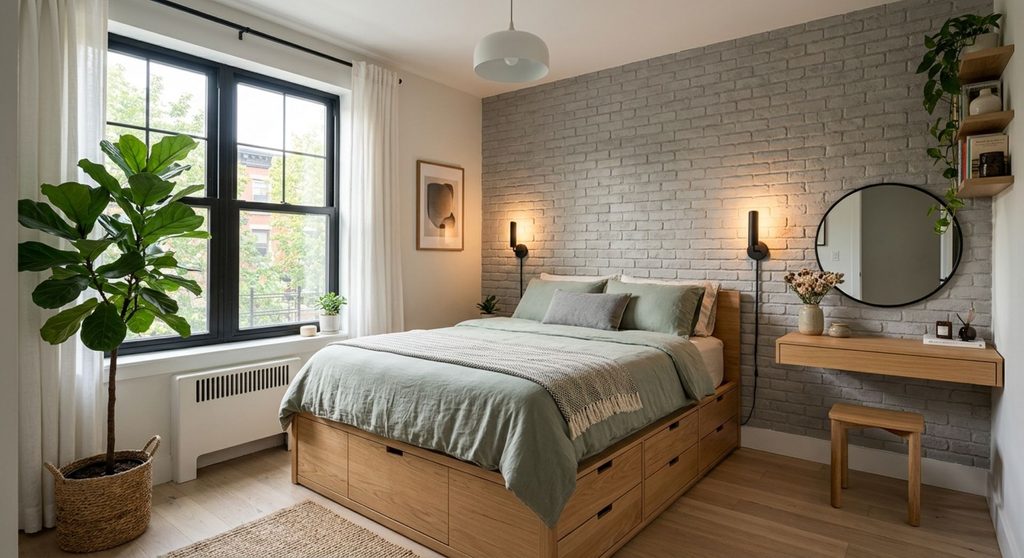
For apartments with genuine architectural character — think converted lofts, older city buildings, or units with exposed brick — leaning into an industrial-meets-cozy aesthetic can turn a structural quirk into the room’s best feature. The soft grey brick wall in this layout does the heavy lifting, so the rest of the room stays simple and warm.
What makes this layout work:
- Storage bed frame. A platform bed with built-in drawers underneath is one of the single best small-bedroom upgrades available, since it replaces an entire dresser’s worth of storage without adding footprint.
- Wall sconces flanking the headboard. Hardwired or plug-in sconces mounted directly on the brick free up the nightstand and add warm, directional light for reading in bed.
- A floating desk or vanity nook. Tucking a slim floating shelf into an underused corner turns dead space into a functional work-from-home or getting-ready spot.
- Soft textiles to balance hard surfaces. Sage green linens, a knit throw, and a jute or wool rug soften the industrial edge of brick and black metal window frames.
- Round mirror as a focal point. A circular mirror breaks up the brick wall’s linear pattern and bounces light around the room, which is especially useful if natural light is limited.
Best for: Small master bedrooms with existing architectural details (brick, exposed pipes, high ceilings) that deserve to be highlighted rather than covered up.
3. Earthy Warm Boho Small Master Bedroom Decor
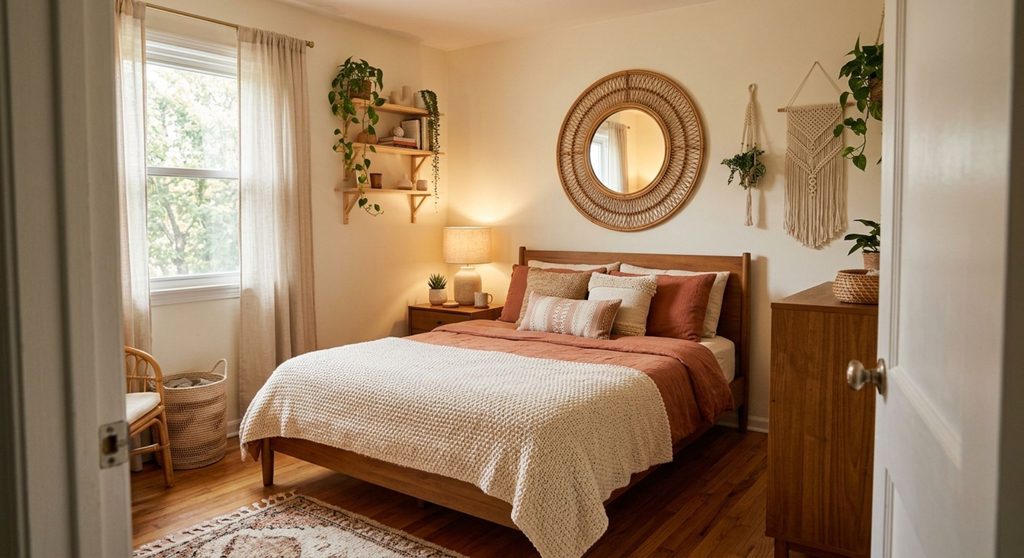
Boho decor has a reputation for clutter, but a well-edited bohemian bedroom is actually one of the coziest options for a small space, because it relies on warmth and texture rather than square footage. This layout uses a terracotta-and-cream palette, layered textiles, and natural materials like rattan and macrame to create a lived-in, welcoming feel.
What makes this layout work:
- Mid-century-style wood bed frame. A frame with tapered or turned wood legs feels lighter than a boxy upholstered bed, which matters in a compact footprint.
- Vertical storage. Floating wall shelves above the nightstand hold books, plants, and decor without eating into floor space — a key trick for small master bedroom layouts.
- Layered, warm-toned bedding. Terracotta, rust, and cream layers create depth without needing a large room to spread out in.
- Statement mirror as wall art. A round rattan or woven mirror above the bed adds texture and functions as both decor and a light-bouncing tool.
- Macrame and hanging plants. Vertical greenery and fiber art draw the eye upward, which visually stretches a low or small room.
Best for: Anyone who wants their small bedroom to feel warm, personal, and collected rather than showroom-perfect.
4. Elegant Transitional Small Master Bedroom
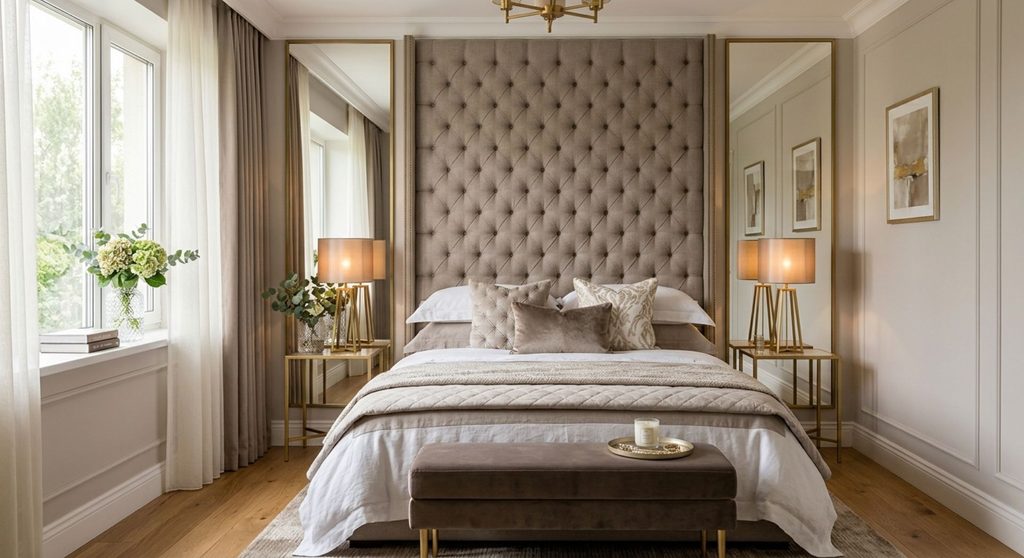
Transitional design blends traditional comfort with cleaner, contemporary lines, and it’s a favorite for anyone who wants their small master bedroom to feel elevated and hotel-like. The tall tufted headboard in this layout is the star, and it’s a clever small-space trick in its own right.
What makes this layout work:
- An oversized headboard. Counterintuitively, a tall, wide headboard makes a small room feel more grand rather than more cramped, because it draws the eye up and anchors the whole wall.
- Mirrors as nightstand backdrops. Full-length mirrors placed behind the nightstands amplify natural light and make the room’s width feel doubled.
- A neutral taupe and off-white palette. Sticking to close, warm neutrals throughout the walls, bedding, and furniture keeps a small room from feeling visually chopped up.
- A structured bench at the foot of the bed. Rather than a large bench, a slim upholstered bench with metal legs adds a place to sit or style without blocking the walkway.
- Metallic accents. Brass lamp bases and picture frames add polish and catch the light, which is especially effective in bedrooms with limited natural light.
Best for: Small master bedrooms that need to feel formal, restful, and a little indulgent — a good fit for primary bedrooms in older or classically styled apartments.
5. Bright Scandinavian Small Bedroom Layout Ideas
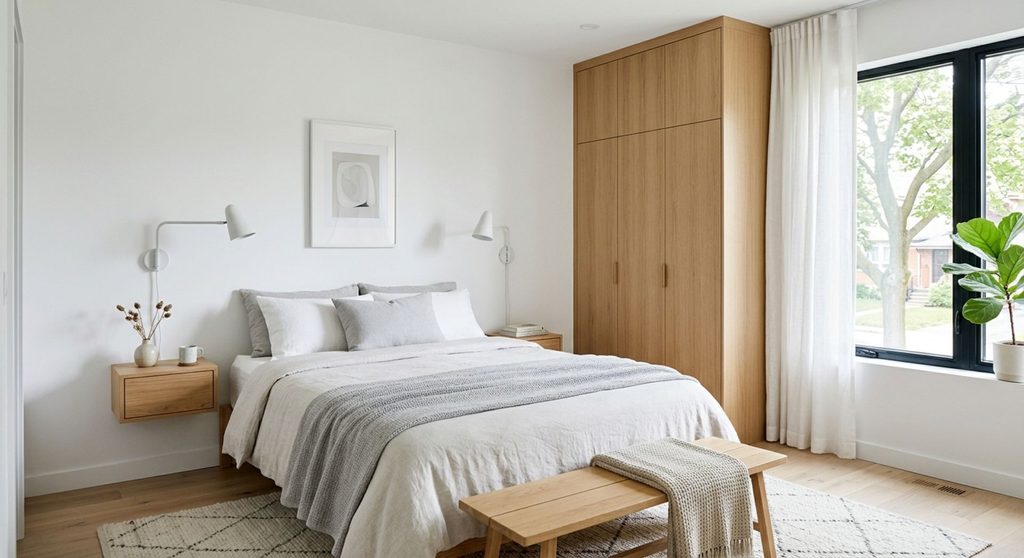
If your small master bedroom gets decent natural light, Scandinavian design is one of the most reliable styles for making the most of it. Crisp white walls, light wood tones, and simple lines keep the room feeling airy rather than boxed in — one reason this style consistently ranks among the most searched-for master bedroom decor ideas.
What makes this layout work:
- Full-height wardrobe as a room divider. A built-in or freestanding wardrobe that reaches the ceiling maximizes vertical storage while visually “closing off” a functional zone, which helps a small room feel more organized.
- Sheer curtains, hung high. Mounting curtain rods close to the ceiling and using light, airy fabric makes windows — and the whole room — feel taller.
- Floating nightstands with drawers. Just like the Japandi layout, wall-mounted storage keeps the floor visually clear, which is one of the single most effective small-bedroom tricks across every style on this list.
- A layered neutral rug. A patterned cream and grey rug adds warmth underfoot without introducing a new color to the palette.
- A simple bench for practical storage. A light wood bench at the foot of the bed provides a spot to set clothes or a bag, keeping the rest of the room clutter-free.
Best for: Bright, light-filled apartments where the goal is an airy, functional, everyday-livable master bedroom.
How to Choose the Right Layout for Your Small Master Bedroom
With five strong master bedroom decor ideas on the table, the right pick usually comes down to three questions:
- How much natural light does the room get? Bright Scandinavian and Japandi styles thrive in well-lit rooms, while boho and transitional palettes can handle — and even benefit from — warmer, lower light.
- What’s your storage situation? If you don’t have a separate closet, prioritize layouts with a full-height wardrobe (Scandinavian) or a storage bed frame (industrial).
- What feeling do you want when you walk in? Calm and quiet points toward Japandi; cozy and personal points toward boho; polished and elevated points toward transitional.
Whichever direction you choose, the underlying small-bedroom rules stay the same: keep the floor as clear as possible, commit to a tight color palette, and let one or two statement pieces — a headboard, a mirror, an accent wall — do the visual work instead of a dozen small accessories.
Final Thoughts
A small master bedroom doesn’t have to feel like a compromise. Each of these five layouts — Japandi, cozy modern industrial, earthy boho, elegant transitional, and bright Scandinavian — proves that thoughtful furniture choices and a disciplined color palette matter far more than square footage. Start with the style that matches your light and storage needs, borrow a trick or two from the others, and you’ll end up with a small bedroom that feels intentional rather than squeezed in.

Leave a Reply